
Torrey Pines brings bluff, chaparral, trail, beach, and Pacific weather into a compact field, but the environment is not simple. Exposure, erosion, heat, wind, surf, tides, closures, and limited habitat can change the appropriate visit. Begin with California State Parks and other responsible official sources, not an old route screenshot.
Check the reserve before the route
Confirm current opening information, trail conditions, parking, access restrictions, weather, and any alerts. If a beach segment is part of the idea, also check tide, surf, and lifeguard guidance. A trail map cannot tell you whether an eroded edge, extreme heat, a closure, or rising water makes that segment inappropriate today.
Choose a route with a smaller version
Decide in advance what you will remove if the day is hotter, windier, busier, or more tiring than expected. A viewpoint and short designated trail can be a complete visit. Do not make a beach loop the only way the day feels successful. Turning around protects both the group and the landscape.
Carry what exposure requires
- Water for the full outing, with extra margin.
- Sun protection and a layer for wind or marine cloud.
- Stable footwear appropriate to the designated surface.
- A downloaded official map or saved route information.
- Necessary medication and a charged phone.
- A plan for waste, since leaving nothing behind includes small items.
Protect a limited habitat
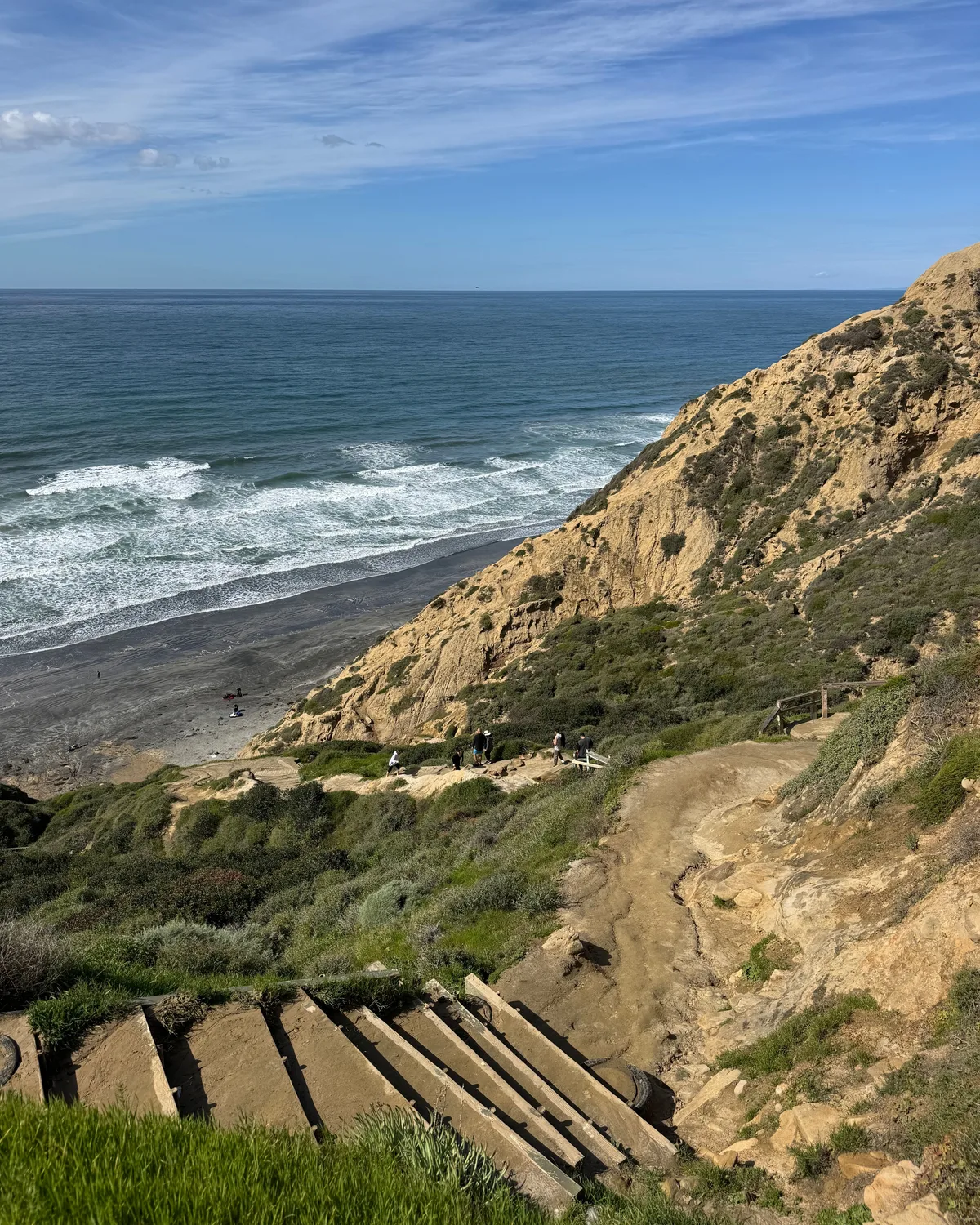
Stay on designated trails and behind barriers. Do not cut switchbacks, climb unstable formations, approach the edge for a photograph, collect plants or rock, feed wildlife, or use loud playback. Give other visitors space and follow current rules for pets, bicycles, drones, and group activity. These limits are part of the place, not an obstacle to it.
Separate beach judgment from trail judgment
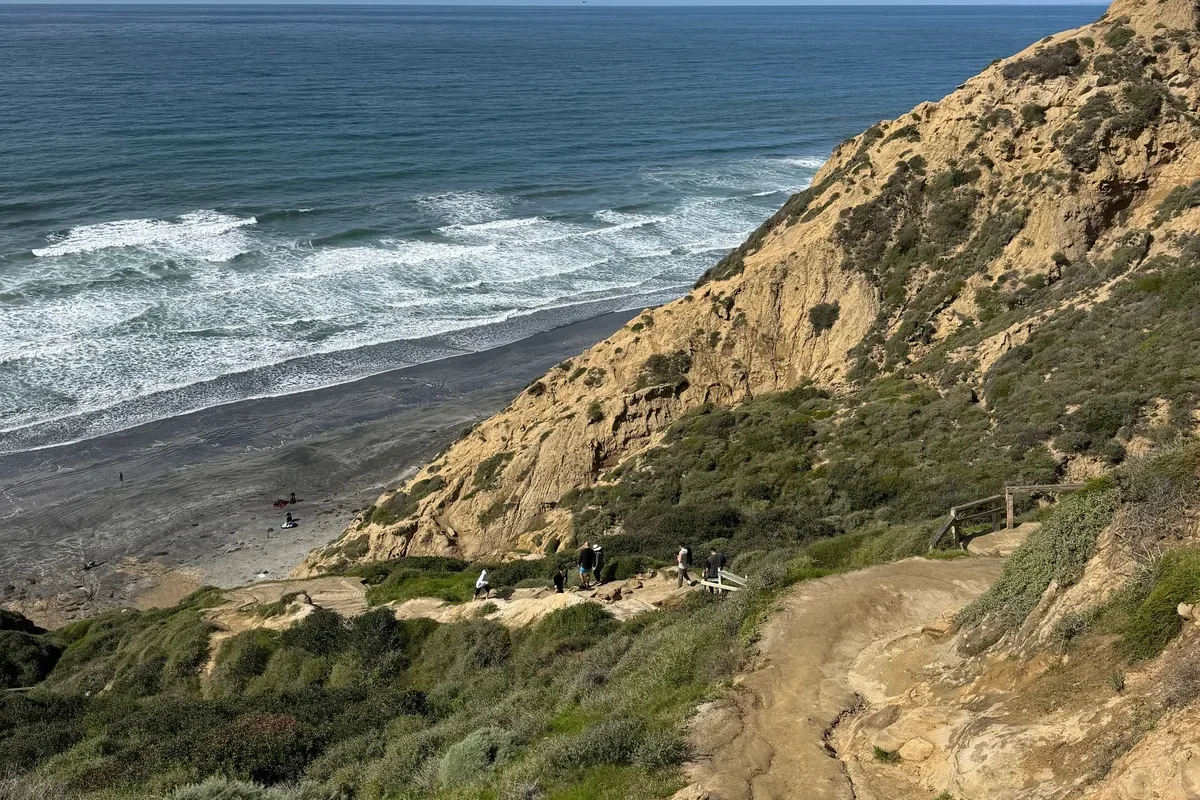
A trail can be manageable while a beach connection is unsafe, and a calm-looking beach can sit below unstable cliffs. Observe posted warnings, tides, surf, rockfall risk, and lifeguard direction. Never stand under an unstable bluff or assume that a wet route will remain passable on the return.
The thoughtful visit is not the longest one. It is the visit that notices how quickly the environment changes, respects the reserve’s limits, and returns with enough energy to make a good decision at the last turn.